

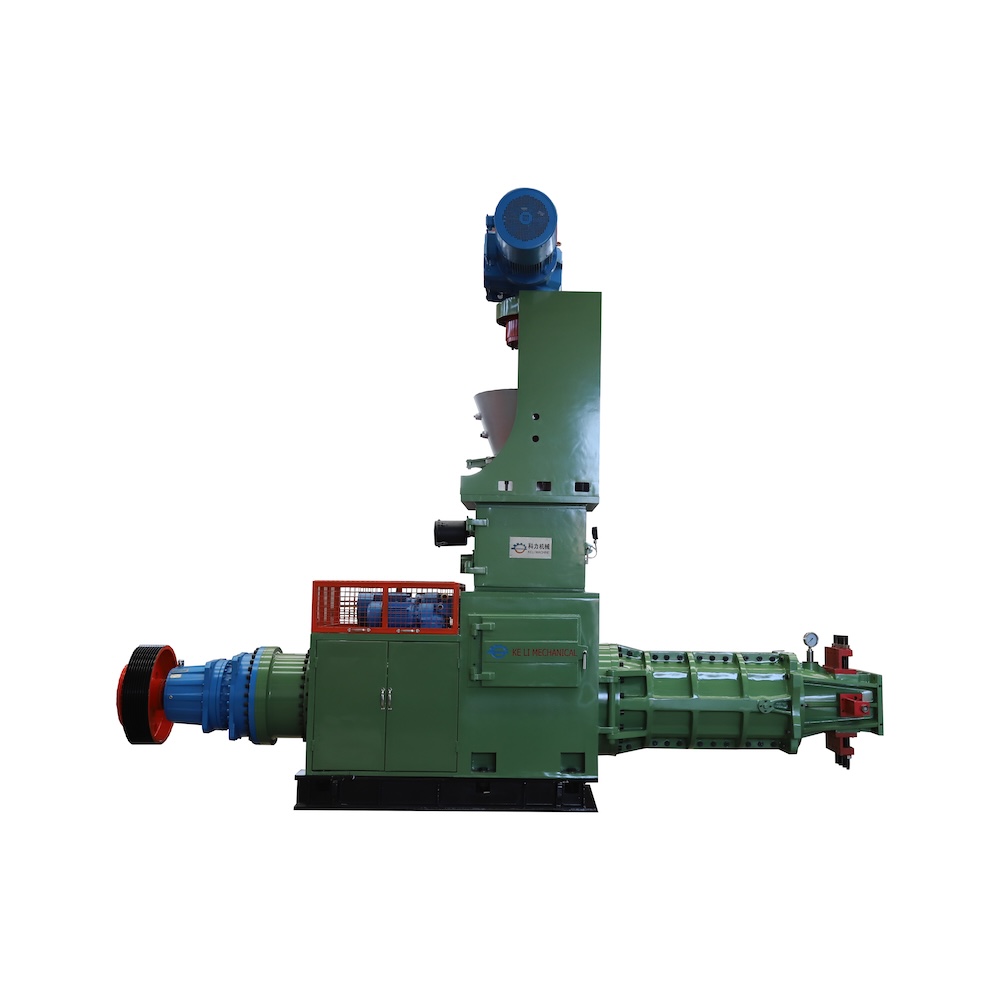
Raw material processing
The raw materials such as silicate cement, lightweight aggregates (such as fly ash and coal gangue), coarse and fine sands, and plastic fibers are pre-treated through processes including drying, mixing and heating to ensure the quality and fluidity of the raw materials.
Extrusion molding
The pre-treated raw materials are extruded through the extruder under high pressure, forming sheets with different cross-sectional shapes at the die opening. This process requires the removal of internal air through a vacuum exhaust system to ensure the dense structure of the sheets.
Maintenance and hardening
The extruded sheets need to undergo high-temperature and high-pressure steam curing to further enhance their physical properties. For instance, a 60mm thick sheet must be maintained at a certain humidity and temperature in the curing system to ensure that its flexural strength reaches above 17.6 MPa.
Cutting and Packaging
After the maintenance is completed, the panels are processed into the required sizes by the cutting equipment, and then packaged for transportation and construction.
Construction process
Dry construction: Fixed using large-head twist-lock screws. For indoor construction, leave a 3mm gap at the connection points of the panels, and 5mm for outdoor ones.
Hybrid construction: Install the reinforcing cross-columns first, then lock the screws for fixation. The screw spacing is 10cm.
Exterior wall construction: Use a galvanized framework with a thickness of 1.2mm or more as the support. First, stick the anti-clamping board, then install the cement board.
The ECP boards produced by this process possess features such as high strength, good weather resistance and light weight. They are suitable for applications in building facades, partitions, and other scenarios.